
Published: 01/19/2026
Share this article

Executive Summary
Policies and procedures in healthcare shape how care is delivered every day. They influence how staff respond to risk, how consistently services are provided, and how confident teams feel when navigating complex situations. Yet in many organizations, these documents are treated as static requirements rather than living tools. They exist, but they do not always work.
In this Insight, we focus on getting policies and procedures in healthcare right by grounding them in practicality, usability, and real-world operations. Drawing from what we see across ambulatory care, behavioral health, and tribal health organizations, we explore how effective policies support leadership decisions, strengthen compliance, and help staff do their jobs well. When policies and procedures are clear, current, and trusted, they become a foundation for safer care and stronger organizations.
Key Takeaways
-
Policies and procedures must reflect real-world operations. When documentation aligns with how work is actually done, staff are more confident, care is more consistent, and risk is reduced.
-
Clear, usable policies strengthen both compliance and culture. Well-written policies support onboarding, reduce staff frustration, and help leaders maintain accountability without slowing care.
-
Strong governance keeps policies effective over time. Defined ownership, regular review cycles, and staff feedback ensure policies remain current, trusted, and sustainable as organizations evolve.
Table of Contents
Hide
- 1. Executive Summary
- 2. Key Takeaways
- 3. Why Policies and Procedures in Healthcare Matter More Than Ever
- 4. The Real Impact of Getting Policies and Procedures in Healthcare Wrong
- 5. Understanding the Regulatory and Accreditation Landscape
- 6. What Effective Policies and Procedures in Healthcare Actually Do
- 7. Tailoring Policies and Procedures to Different Healthcare Markets
- 8. Modernizing Policies and Procedures in Healthcare
- 9. Leadership Accountability and Long-Term Sustainability
- 10. Conclusion
- 11. Ready to Talk?
- 12. Further Reading
- 13. Related Articles
Why Policies and Procedures in Healthcare Matter More Than Ever
Healthcare organizations face growing regulatory complexity and audit pressure. Requirements continue to change. Oversight is more frequent. Expectations are higher. When policies and procedures in healthcare are outdated or unclear, audits become stressful and disruptive. Strong documentation helps reduce risk and gives leaders confidence when compliance questions arise. Our Insight on Audit Readiness in Behavioral Health: How Compliance Officers Lead Beyond the Checklist highlights how clear policies support both compliance and operations.
Workforce shortages add another layer of pressure. Many organizations are onboarding new staff quickly and with limited training time. Without clear guidance, staff rely on guesswork or informal workarounds. Well-written policies and procedures in healthcare provide consistency. They support onboarding and reduce confusion. They are especially important during growth, expansion, or the launch of new care models. As we discuss in The Basics of Strategic Planning for Healthcare Organizations, strong leadership depends on clear structure and shared expectations.
Safety and consistency are also under greater scrutiny. Patients, payers, and regulators expect reliable care across locations and services. In this environment, policies and procedures are not background documents. They are essential tools that support safe care, consistent performance, and day-to-day decision-making.
The Real Impact of Getting Policies and Procedures in Healthcare Wrong
When policies and procedures in healthcare fail, the impact shows up quickly. Leaders often feel it before they can clearly name it. Issues appear as safety events, staff frustration, or audit findings, but the root cause is often the same. Expectations are unclear. Processes are inconsistent. Accountability is blurred. Making these risks visible is the first step toward fixing them.
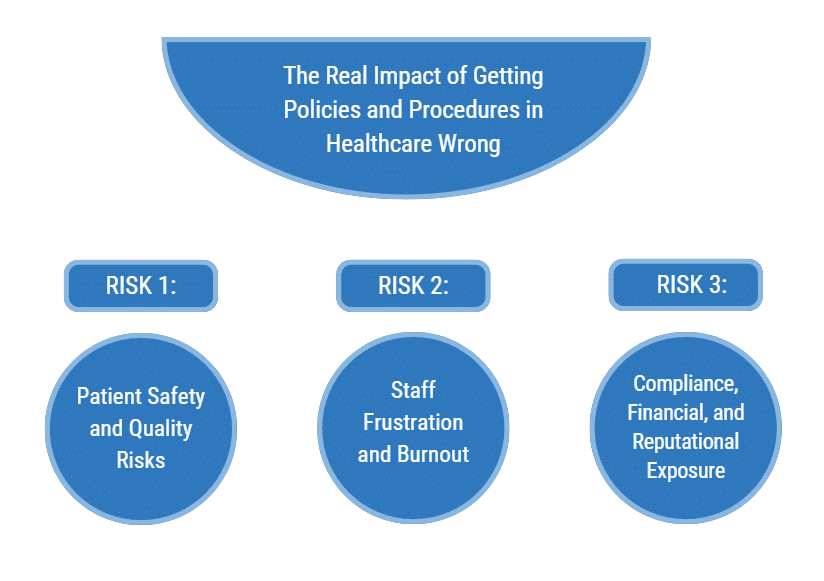
Patient Safety and Quality Risks
Unclear or outdated policies create variation in care delivery. Staff follow different steps based on habits or personal experience. Critical tasks may be missed. Documentation may be incomplete. Over time, this inconsistency increases safety risk and makes it harder to ensure reliable outcomes.
Policies and procedures in healthcare are meant to create shared standards. When they do not, accountability becomes unclear. Teams are unsure who owns each step of the process. Leaders are left reacting to issues instead of preventing them.
Staff Frustration and Burnout
When expectations are unclear, staff feel the strain. New employees struggle to learn their roles. Experienced staff rely on informal workarounds to get through the day. Those workarounds often become accepted practice, even when they introduce risk.
This creates frustration and fatigue. Staff feel unsupported and uncertain. Leaders spend time resolving confusion instead of focusing on strategy and improvement. Practical, usable guidance helps reduce stress and builds confidence across teams.
Compliance, Financial, and Reputational Exposure
Documentation gaps often surface during audits or reviews. When written guidance does not match practice, organizations face findings and corrective action plans. These issues consume time, energy, and resources.
Financial risks can follow. Reimbursement may be delayed. Funding may be questioned. Repeated issues can damage trust with regulators and partners. Getting policies and procedures in healthcare rights helps protect the organization by aligning expectations, practice, and accountability.
Understanding the Regulatory and Accreditation Landscape
Healthcare leaders operate in a complex and changing regulatory environment. Policies and procedures in healthcare sit at the center of this landscape. They translate regulatory expectations into daily practice. When leaders understand how oversight and accreditation shape documentation, they are better positioned to manage risk and support operations.
Federal and State Oversight Expectations for Policies and Procedures in Healthcare
Federal oversight sets the foundation for many healthcare organizations. The Centers for Medicare and Medicaid Services (CMS) establishes Conditions of Participation that define how care must be delivered and documented. These requirements directly influence how policies are written and maintained. When policies do not align with CMS expectations, audit risk increases.
State licensing requirements add another layer of oversight. Rules vary by care setting and service type. They also change over time. Clear and current policies help leaders demonstrate compliance at both the federal and state levels. The U.S. Department of Health and Human Services (HHS) provides regulatory guidance and oversight resources that help organizations track federal priorities.
Accreditation Standards and Their Impact on Policies and Procedures in Healthcare
Accreditation surveys strongly influence how policies and procedures are structured. Surveyors review documentation to confirm that written guidance matches practice. When policies are outdated or unclear, findings are more likely. This often leads to corrective action plans that consume time and resources.
Many organizations update policies only after a survey. These reactive updates focus on individual findings instead of root causes. Over time, documentation becomes fragmented and harder for staff to use. A proactive approach to policies and procedures in healthcare supports survey readiness and reduces disruption during reviews.
What Effective Policies and Procedures in Healthcare Actually Do
Effective policies and procedures in healthcare are practical tools. They are not written to impress regulators or sit on a shelf. They exist to guide action, support staff, and reinforce what the organization values most. When policies work, they make daily operations clearer and safer for everyone involved.
Translate Requirements into Clear Action with Policies and Procedures in Healthcare
Strong policies turn complex requirements into clear steps. They explain what to do, when to do it, and who is responsible. Staff do not have to interpret regulations on their own. They can follow practical, step-by-step guidance that fits their role.
This clarity reduces hesitation and mistakes. It also supports consistent training and onboarding. When expectations are written in plain language, staff are more likely to follow them.
Enable Consistency Without Slowing Care Through Policies and Procedures in Healthcare
Consistency matters in healthcare, but rigidity creates problems. Effective policies support standardization while allowing room for professional judgment. They define the baseline without limiting clinical or operational decision-making.
This balance helps teams move efficiently. Staff know the standard approach and when flexibility is appropriate. Care remains consistent without becoming delayed or overly bureaucratic.
Reinforce Organizational Values Through Policies and Procedures in Healthcare
Policies reflect what an organization truly values. When written well, they reinforce safety, respect, and accountability. They show staff what matters most, not just what is required.
Clear policies support a culture of responsibility. They help leaders hold teams accountable in a fair and consistent way. Over time, they strengthen trust and align daily actions with organizational values.

Tailoring Policies and Procedures to Different Healthcare Markets
Policies and procedures in healthcare are not one size fits all. Different care settings face different risks, expectations, and operational realities. Effective documentation reflects those differences while still supporting consistency, compliance, and quality across the organization.
Tribal Health Organizations and Policies and Procedures in Healthcare
Cultural and community alignment also matter. Policies and procedures in healthcare should reflect community values, traditions, and priorities. When documentation aligns with culture and governance, it is more likely to be trusted and followed. Our work with Tribal organizations reinforces the importance of tailoring policies to support both compliance and community-centered care. Learn more about our experience on our Tribal Health services page.
Behavioral Health Organizations and Policies and Procedures in Healthcare
Behavioral health organizations face complex documentation requirements. Consent, privacy, and confidentiality standards are layered and highly regulated. Policies must clearly define how information is collected, shared, and protected. When guidance is unclear, risk increases quickly.
Workforce turnover adds additional strain. New staff must understand expectations fast, often in high-acuity environments. Clear and accessible policies and procedures in healthcare support onboarding and reduce reliance on informal practices. They also help maintain consistency across programs and locations. More insight into this market can be found on our Behavioral Health services page.
When policies are tailored to the realities of each market, they become practical tools instead of administrative burden. This alignment supports staff, strengthens compliance, and improves care delivery.
Ambulatory Care Organizations and Policies and Procedures in Healthcare
Ambulatory care organizations operate at a fast pace. High patient volume, tight schedules, and limited visit time leave little room for uncertainty. Policies and procedures in healthcare must support efficiency without adding friction. When guidance is unclear, delays and inconsistencies follow.
Multi-site operations add another layer of complexity. Leaders need standardization across locations while still allowing teams to adapt to daily realities. Clear, well-structured policies help align workflows, support staff, and maintain consistent care across sites. Our work in this space focuses on building documentation that scales with growth and supports operational flow. Learn more about how we support these organizations on our Ambulatory Care market page.
Modernizing Policies and Procedures in Healthcare
Modernizing policies and procedures in healthcare is less about rewriting everything and more about making documentation work for today’s environment. Leaders need policies that are easy to understand, easy to maintain, and align with how care is delivered now. When documentation evolves with the organization, it becomes a tool staff actually use.
Simplifying Language and Structure in Policies and Procedures in Healthcare
Many policies fail because they are hard to read. Long sentences, legal language, and dense formatting create barriers. Staff skim or avoid them altogether. Simplifying language makes expectations clearer and easier to follow.
Plain language improves usability. Clear headings, short sections, and straightforward steps help staff find what they need quickly. When policies are easy to navigate, compliance improves and frustration drops.
Aligning Policies and Procedures in Healthcare with Technology
Technology shapes how work gets done. Policies must reflect that reality. When documentation does not align with EHR workflows or IT systems, staff are forced to choose between policy and practice.
Effective policies account for how tasks are completed in the system. They support electronic workflows instead of working against them. This alignment reduces errors, improves efficiency, and supports consistent documentation across teams.
Establishing Clear Governance for Policies and Procedures in Healthcare
Strong governance keeps policies current and relevant. Clear ownership defines who is responsible for each policy. Regular review cycles prevent documents from becoming outdated. Accountability ensures changes are made when operations or regulations shift.
Without governance, policies slowly lose value. With it, they remain trusted and useful. For leaders looking to strengthen this structure, our downloadable resources provide practical tools. One helpful starting point is our free guide on building and maintaining effective healthcare documentation, available in our Free Downloads library
Leadership Accountability and Long-Term Sustainability
Policies and procedures in healthcare only remain effective when leaders stay actively involved. Sustainability does not come from a single update or annual review. It comes from consistent attention, reinforcement, and a willingness to adjust as the organization changes. Leadership accountability ensures policies remain relevant and usable over time.
Training, Onboarding, and Reinforcement
Policies must be embedded into daily work. Training and onboarding is the first opportunity to do that. New staff should learn policies as part of how work is done, not as separate reading assignments.
Ongoing reinforcement matters just as much. Leaders and managers should reference policies during coaching, meetings, and decision-making. When policies are visible and used, they become part of the culture rather than background documents.
Monitoring, Feedback, and Continuous Improvement
Sustainable documentation requires regular monitoring. Internal audits help leaders confirm that practice aligns with written guidance. They also surface gaps before external reviews do.
Staff feedback is equally important. Frontline teams often know when policies no longer reflect reality. Creating simple ways for staff to share input helps organizations improve policies and strengthen trust at the same time.
Knowing When to Retire or Rewrite Policies
More policies do not equal better guidance. Over time, organizations accumulate documents that overlap, conflict, or no longer apply. This creates confusion and policy fatigue.
Leaders must be willing to retire or rewrite policies that no longer serve the organization. Reducing policy overload improves usability and helps staff focus on what truly matters. This discipline supports long-term sustainability and keeps policies and procedures in healthcare clear, current, and effective

Conclusion
If your policies and procedures feel outdated, hard to use, or disconnected from daily operations, you are not alone. We work with healthcare leaders who want documentation that supports staff, strengthens compliance, and reflects how care is actually delivered.
Our team partners with ambulatory care, behavioral health, and tribal health organizations to modernize policies and procedures in a practical, sustainable way. We focus on clarity, usability, and alignment with your people, systems, and goals.
If you are ready to move from reactive updates to a proactive, people-first approach, we are here to help. Contact us to start a conversation about how stronger policies and procedures can support safer care and stronger operations.
Ready to Talk?
We partner with forward-thinking healthcare leaders to shape the future. By understanding your goals, we build strategies that improve operations, exceed financial targets, and elevate patient care. Contact us to get started!
Contact us
Further Reading
-
Audit Readiness in Behavioral Health: How Compliance Officers Lead Beyond the Checklist - John Lynch & Associates insight on how strong policies and leadership support audit readiness and compliance beyond basic checklists.
-
The Basics of Strategic Planning for Healthcare Organizations - John Lynch & Associates insight on how clear structure, governance, and documentation support effective healthcare leadership.
-
Tribal Health services page - Overview of John Lynch & Associates consulting services supporting compliance, governance, and culturally aligned care in Tribal Health organizations.
-
Behavioral Health services page - Overview of John Lynch & Associates consulting services supporting policy development, compliance, and operational alignment in behavioral health organizations.
-
Ambulatory Care - Overview of John Lynch & Associates consulting services supporting scalable operations, compliance, and workflow consistency in ambulatory care settings.
-
Free Downloads library - Collection of practical tools and resources to support healthcare leaders in building and maintaining effective policies and procedures.
- U.S. Department of Health and Human Services (HHS) - Federal source providing regulatory guidance and oversight resources for healthcare leaders.
Related Articles

General Healthcare
May 26, 2026
Compliance Audit Checklist: Identify Risks Before an Audit
Read article

General Healthcare
April 15, 2026
How to Build an EHR Training Plan That Reduces Go-Live Risk and Accelerates Adoption
Read article

General Healthcare
March 30, 2026
The Complete EHR Implementation Checklist for a Successful Clinic Go-Live
Read article