
Published: 10/02/2024
Share this article

Behavioral health billing is often more complex and stressful than billing in other areas of healthcare. Providers face unique challenges with coding, reimbursement, and insurance claims that directly affect revenue and operational efficiency.
Unlike other medical fields, behavioral health has distinct documentation and billing requirements. These differences can lead to higher rates of claim denials and financial losses if workflows are not managed effectively.
Common challenges include frequent claim rejections caused by inaccurate or incomplete coding, navigating multiple insurance policies with different rules, and keeping up with specialized mental health coding guidelines.
These issues make it harder for behavioral health practices to maximize reimbursements and maintain steady cash flow. Many providers struggle to balance the time needed for accurate billing with the growing demands of patient care.
The key to overcoming these barriers is streamlining the billing process and reducing avoidable errors. Strategies such as adopting technology solutions, automating manual tasks, and improving coding accuracy can significantly reduce denials and strengthen the revenue cycle.
John Lynch & Associates specializes in providing tailored solutions for behavioral health organizations facing these challenges. From integrating efficient EHR systems to automating claims management, the right technology can transform billing from a persistent pain point into a more streamlined, reliable process.
In this article, we will share practical tips to overcome common behavioral health billing challenges and explain how partnering with an experienced IT consultant can make a meaningful difference.
Common Behavioral Health Billing Challenges
Behavioral health billing comes with its own set of hurdles, and understanding these challenges is crucial for improving reimbursement and maintaining financial stability. Studies show up to 30% of behavioral health claims are rejected due to errors, highlighting just how difficult it can be to accurately code, document, and submit claims in this specialty.
From complex coding rules to unpredictable payer requirements, behavioral health practices face a range of issues that directly impact their revenue cycle. Below are some of the most common challenges and practical ways to address them.
Complex Coding Requirements
Behavioral health coding is often more nuanced than in other medical specialties. Providers must navigate evolving diagnostic criteria, precise documentation requirements, and careful use of CPT, ICD-10, and DSM-5 codes. Even small errors such as using outdated codes or missing modifiers can result in denied or underpaid claims.
Tips to Tackle the Issue:
- Stay up to date with the latest CPT, ICD-10, and DSM-5 coding guidelines and payer-specific rules.
- Train staff regularly on behavioral health–specific coding best practices.
- Conduct internal audits to identify documentation gaps that could lead to coding errors.
Frequent Claim Denials in Behavioral Health
Claim denials are especially common in behavioral health. Denials may stem from incorrect coding, missing documentation, lack of medical necessity, expired authorizations, or payer-specific nuances. These denials slow down reimbursement, increase administrative workload, and create cash flow challenges.
Tips to Tackle the Issue:
- Use denial tracking tools to identify recurring issues and address the root causes.
- Implement a pre-submission quality check to ensure every claim is complete and error-free.
- Standardize documentation templates to reduce inconsistencies that contribute to denials.
Varying Insurance Policies and Reimbursement Rates
One of the biggest pain points for behavioral health providers is dealing with the vast differences in payer rules. Coverage limits, session caps, authorization requirements, and reimbursement rates vary widely not only between insurers, but often between plan types within the same insurer. These shifting rules make it difficult for providers to predict revenue or manage scheduling efficiently.
Tips to Tackle the Issue:
- Regularly review and update internal knowledge of payer policies, fee schedules, and authorization rules.
- Use billing software or EHR tools that store payer-specific requirements for easy reference.
- Develop scripts or workflows to verify benefits and authorizations before appointments.
Download Effective Strategies for Reducing Claims Denials. This whitepaper offers a straightforward framework to stabilize billing operations in behavioral health settings and reduce preventable denials across service lines.

Tips for Improving Behavioral Health Billing Processes
Improving behavioral health billing may feel overwhelming, but with the right strategies and tools, providers can streamline workflows, increase reimbursement, and reduce administrative strain.
Below are actionable, high-impact tips that help behavioral health practices overcome common billing challenges and build a more efficient revenue cycle.
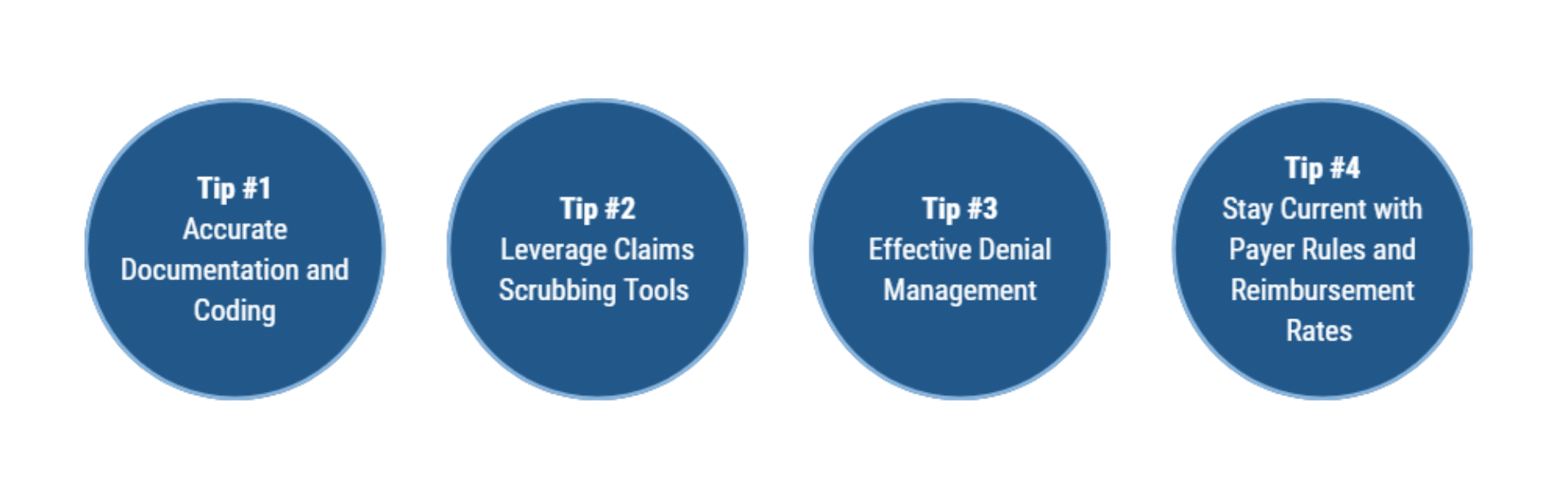
Tip #1: Strengthen Documentation and Coding Accuracy
Accurate, detailed documentation is essential for clean claims. Behavioral health practices often experience denials due to incomplete chart notes, missing clinical details, or coding mistakes. Proper documentation minimizes risks such as undercoding, overcoding, and incorrectly billed procedures.
How to Implement:
- Conduct regular staff training on behavioral health specific documentation and coding requirements, including payer-specific nuances.
- Use an EHR system designed for behavioral health to support accurate note-taking, coding prompts, and documentation workflows.
- Audit charts periodically to identify recurring documentation gaps and coding inconsistencies.
Tip #2: Leverage Claims Scrubbing Tools
Claims scrubbing is one of the most effective ways to reduce preventable denials. These tools identify errors, missing information, and inconsistencies before claims are submitted saving time and helping providers get paid faster.
How to Implement:
- Use a robust claim scrubber that integrates directly with your EHR or billing system.
- Build a checklist of common errors (incorrect modifiers, outdated codes, missing authorizations) and review each claim prior to submission.
- Assign a team member to oversee pre-submission claim reviews to ensure consistency.
Tip #3: Strengthen Denial Management Processes
Effective denial management is essential for maintaining a healthy cash flow. Without a structured system, denied claims can pile up, delay reimbursement, and drain administrative resources.
How to Implement:
- Track every denial and log the reason codes to identify patterns that may require workflow changes or staff retraining.
- Create a standard operating procedure (SOP) for managing denials, including clear timelines for follow-ups, appeals, and resubmissions.
- Review denials monthly to uncover systemic issues such as documentation gaps or missing authorizations and correct them proactively.
Tip #4: Stay Up to Date on Payer Policies and Reimbursement Rates
Insurance policies frequently change, and behavioral health billing is especially affected by shifting coverage rules, authorization requirements, and reimbursement rates. Staying informed prevents denials and ensures providers receive accurate payment.
How to Implement:
- Assign a dedicated staff member to monitor updates from major payers and disseminate important changes to the team.
- Maintain an internal database or centralized software system that stores each payer’s rules, covered services, and documentation requirements.
- Partner with an IT consultant to implement tools that automate tracking and display payer-specific billing logic within your workflows.
See how your RCM metrics measure up. Evaluate your billing performance with clarity and confidence. Our free RCM Performance Benchmarks & Metrics Guide outlines the key performance indicators every healthcare organization should be tracking along with industry benchmark ranges to help you identify opportunities for improvement.
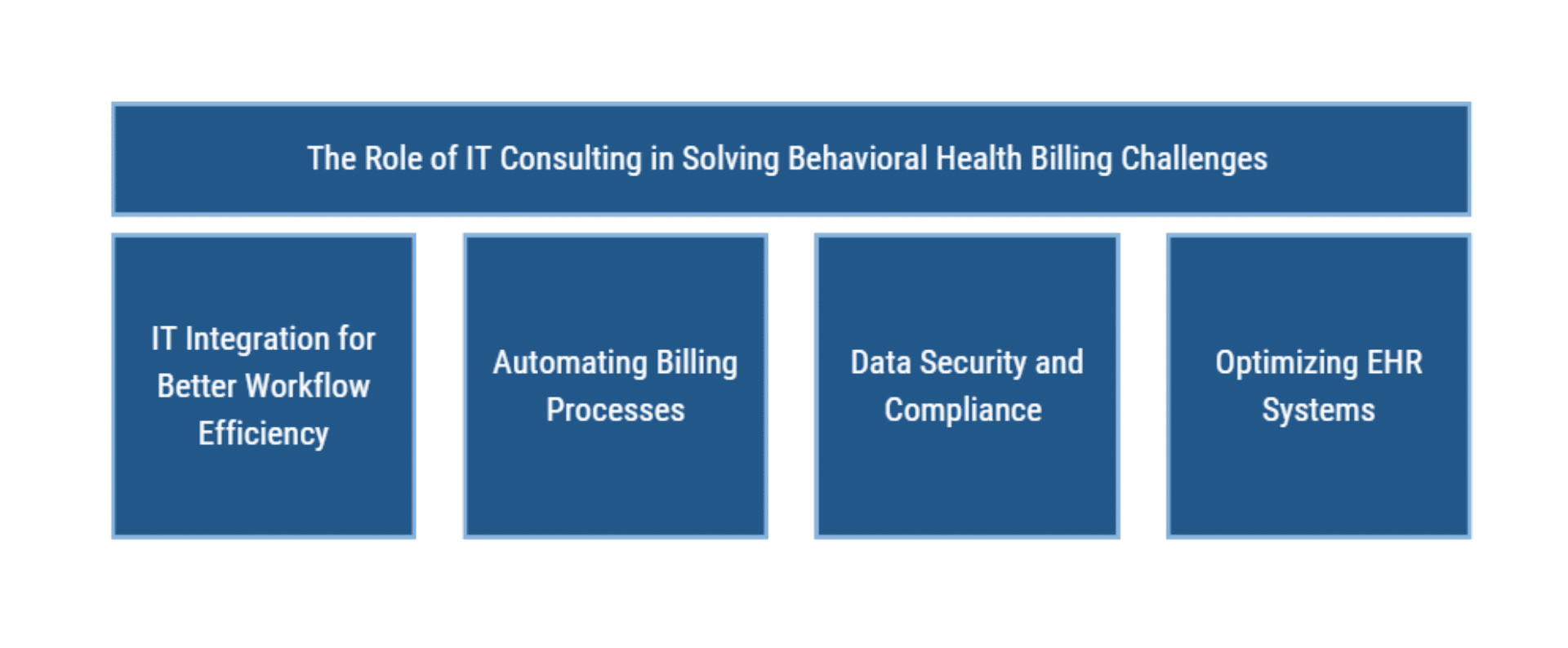
The Role of IT Consulting in Solving Behavioral Health Billing Challenges
Technology is essential to overcoming the complexities of behavioral health billing. From automating manual tasks to tightening compliance, the right IT strategy can dramatically enhance billing accuracy, workflow efficiency, and revenue performance. An experienced IT consultant helps behavioral health providers streamline processes, eliminate errors, and build a more reliable billing system. Below are key ways IT consulting can transform your billing operations.
IT Integration for Better Workflow Efficiency
Many behavioral health practices operate with fragmented systems - billing, scheduling, documentation, and EHR tools that don’t communicate. These silos lead to duplicate work, inconsistent data, and preventable billing errors.
How an IT Consultant Can Help:
- Integrate billing systems, EHR platforms, and scheduling tools into a unified ecosystem.
- Enable seamless data sharing, ensuring staff always work with accurate, up-to-date information.
- Reduce manual tasks and errors by streamlining workflows across the entire patient journey.
Integrated systems not only speed up billing but also improve staff productivity and reduce administrative frustration.
Automating Billing Processes
Manual billing processes slow down reimbursements and increase the likelihood of mistakes that result in denials. Automation tools can transform billing by handling repetitive tasks with consistent accuracy.
How an IT Consultant Can Help:
- Implement automation tools to streamline tasks like coding, documentation, eligibility checks, and claims submission.
- Build automated workflows from patient intake through reimbursement.
- Reduce administrative burden so staff can spend more time delivering quality patient care.
Automation ensures cleaner claims, faster turnaround times, and fewer interruptions in cash flow.
Strengthening Data Security and Compliance
Behavioral health billing involves handling highly sensitive patient information. Ensuring compliance with regulations like HIPAA is critical to avoiding breaches, penalties, and reputational harm.
How an IT Consultant Can Help:
- Implement secure systems for data storage, transmission, and access control.
- Set up routine security audits, data encryption, multi-factor authentication, and user-level permissions.
- Ensure billing, EHR, and communication systems follow HIPAA and industry best practices.
With proper safeguards in place, organizations protect patient privacy and significantly reduce risk exposure.
Optimizing EHR Systems
Many behavioral health practices struggle with EHR systems that are not designed for mental health workflows. This creates documentation challenges and leads to coding errors that delay reimbursement.
How an IT Consultant Can Help:
- Optimize your existing EHR or help select and implement a new system tailored to behavioral health needs.
- Customize templates, workflows, and documentation processes to support accurate coding and efficient charting.
- Improve reporting and data accessibility to streamline claim creation and reduce denials.
A well-optimized EHR system becomes a powerful tool for clean claims and consistent revenue performance.
Many billing challenges begin upstream in scheduling, documentation, and verification workflows. A structured audit helps identify where those breakdowns occur and how to resolve them before they affect reimbursement. Download the RCM Audit Checklist to evaluate current workflows and uncover improvement opportunities.
Conclusion
The complexities of behavioral health billing can be overwhelming and often get in the way of delivering high-quality patient care. Challenges like complex coding requirements, frequent claim denials, and constantly changing insurance policies make it difficult for providers to maintain a healthy and predictable revenue stream.
By understanding these common obstacles and taking proactive steps such as improving documentation, using claim-scrubbing tools, and adopting a structured denial management process practices can strengthen their billing performance. But long-term success requires more than manual improvements. Technology is now a critical part of creating an efficient, accurate, and compliant billing workflow.
This is where an experienced IT consulting partner like John Lynch & Associates becomes invaluable. Through system integration, automation of billing tasks, and EHR optimization, we help behavioral health practices streamline their processes from end to end.
These improvements reduce errors, speed up reimbursements, and ultimately free your team to focus on what matters most: providing excellent patient care.
If you’re ready to tackle behavioral health billing challenges and improve your operational efficiency, complete the form below to connect with healthcare IT experts who understand the unique needs of behavioral health providers.
Ready to Talk?
We partner with forward-thinking healthcare leaders to shape the future. By understanding your goals, we build strategies that improve operations, exceed financial targets, and elevate patient care. Contact us to get started!
Contact us
Related Articles

Behavioral Health
August 17, 2026
Behavioral Health Compliance Audit: Governance Gaps Leaders Miss
Read article

Behavioral Health
August 3, 2026
How to Know if Your Behavioral Health Organization is Ready to Scale
Read article

Behavioral Health
July 8, 2026
How Can Behavioral Health Clinics Simplify EHR Workflows to Reduce Billing Errors and Rework?
Read article